


EXCLUSIVE: Kennedy Family 'Curse' Dismissed — World-Famous Writer Blames Political Dynasty's Litany of Horrific Tragedies on Their 'Arrogance and Privilege'

Writer blamed tragedies on arrogance and privilege in claims
April 30 2026, Updated 4:41 p.m. ET





James Patterson has dismissed the long-mythologized "Kennedy curse" as a product of privilege and power, arguing the political dynasty's history of tragedy stems less from fate than from a pattern of risk-taking behavior embedded within its culture.
Breaking Celebrity News can reveal the 79-year-old bestselling writer revisits the Kennedys' turbulent legacy in The Kennedy Curse, co-authored with Cynthia Fagen, tracing decades of deaths, scandals and near-misses that have fueled one of America's most enduring myths.
Kennedy Tragedies Reexamined In New Book


James Patterson dismissed the 'Kennedy curse' as a product of privilege.
From wartime fatalities and assassinations to plane crashes and personal crises, the family's story has often been framed as one of uncanny misfortune. Patterson's account, however, coincides with renewed public fascination following the success of the Disney+ series Love Story: John F Kennedy Jr & Carolyn Bessette, which has introduced a new generation to the family's history.
A source familiar with the book's framing said the authors challenge the idea of a "Kennedy curse" in the most brutal way possible.
They added: "What Patterson is arguing is that this is not a curse in any mystical sense – it is the consequence of a family raised in extreme white privilege that gave them the arrogance to believe normal rules did not apply to them. That sense of entitlement often led to dangerous decisions, and those decisions had real-world consequences.
"Readers may find that interpretation unsettling, but it reframes decades of tragedy through a more grounded, human lens."
Plane Crash Disasters Highlight Risky Decisions
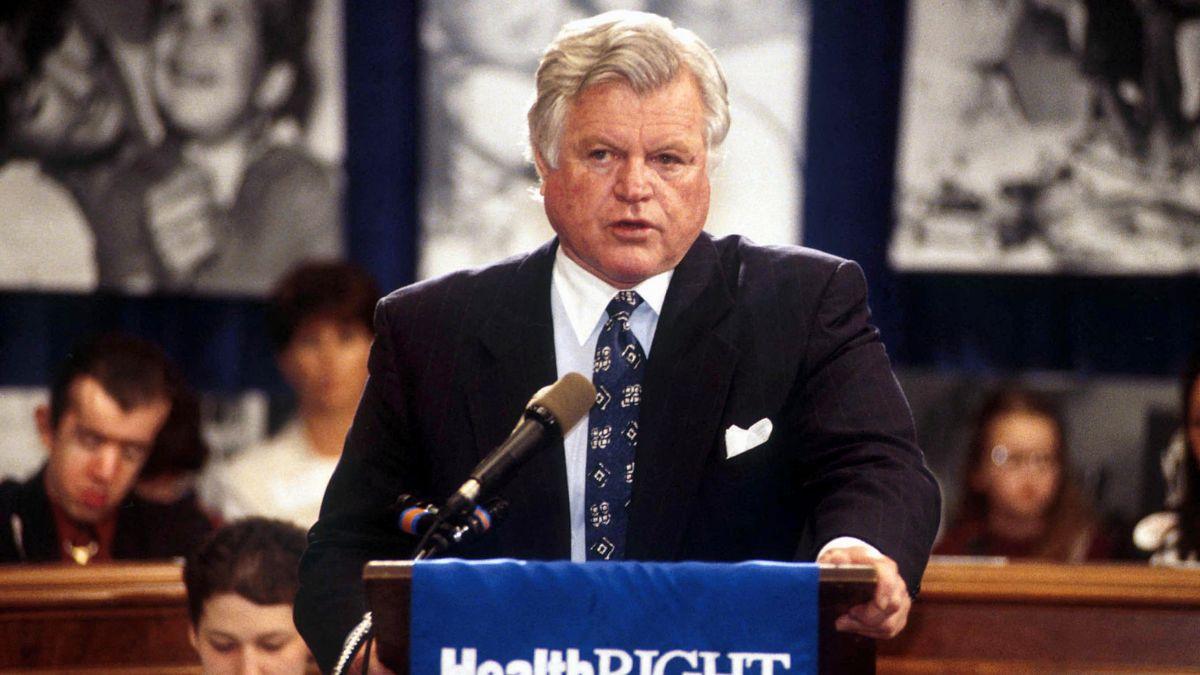
Senator Ted Kennedy survived a catastrophic plane crash in 1964.
The narrative revisits tragedies including the 1964 plane crash involving Senator Ted Kennedy, then 32, who survived catastrophic injuries after boarding a flight in poor weather despite warnings.
Recalling the descent, Kennedy said: "I was watching the altimeter and I saw it drop from eleven hundred to six hundred feet. It was just like a toboggan ride, right along the tops of the trees for a few seconds. Then there was a terrific impact into a tree."
The crash killed pilot Ed Zimny and aide Ed Moss instantly, while fellow senator Birch Bayh pulled Kennedy from the wreckage.
Patterson situates the episode within a broader pattern of high-risk decisions. Another source close to the project said: "Time and again, there are moments where caution was advised but ignored – whether in aviation, politics or personal life. The idea of a 'curse' can obscure the extent to which these were preventable situations."
Assassinations And Wartime Losses Revisited

Assassins killed John F. Kennedy in 1963 and Robert F. Kennedy in 1968.
The book also revisits earlier tragedies, including the death of Joseph Patrick Kennedy Jr at 29 during a secret Second World War mission, when his explosive-laden aircraft detonated midair over England.
His final transmission, 'Spade Flush,' signaled the arming of the payload moments before the fatal blast.
Years later, Kathleen Kennedy, 28, died in a separate plane crash in France after insisting on flying in dangerous weather conditions.
The assassinations of John F Kennedy, aged 46, in 1963, and his brother Robert F Kennedy, aged 42, in 1968, cemented the notion of a family marked by tragedy.
Yet Patterson's account also highlights internal decisions that shaped outcomes, including the controversial lobotomy performed on Rosemary Kennedy at 23, which left her with lifelong cognitive impairment.


Legacy Reframed Beyond The 'Curse' Narrative

Never Miss an

Daily updates from the heart of Hollywood, right to your inbox
By entering your email and clicking Sign Up, you’re agreeing to let us send you customized marketing messages about us and our advertising partners. You are also agreeing to our Terms of Service and Privacy Policy.
In later generations, the pattern continued.
John F Kennedy Jr, 38, died in a 1999 plane crash off Martha's Vineyard after flying in poor visibility, despite warnings.
Other family members faced addiction, illness and fatal accidents, reinforcing the public perception of relentless misfortune.
Eunice Kennedy Shriver, 88 at her death, offered a more introspective view of the family's history.
She said: "I've come to believe that it's not what has happened to our family that has been cursed, as much as it's the fact that we've never been able to deal with it privately. If there's a curse, surely it's that."
Patterson's interpretation stops short of dismissing the scale of loss but reframes its origins.
As one publishing source noted: "The Kennedys' tragedies are real and profound, but the idea that they are random or fated is what the book seeks to dismantle. It suggests a dynasty shaped as much by its own decisions as by external events."